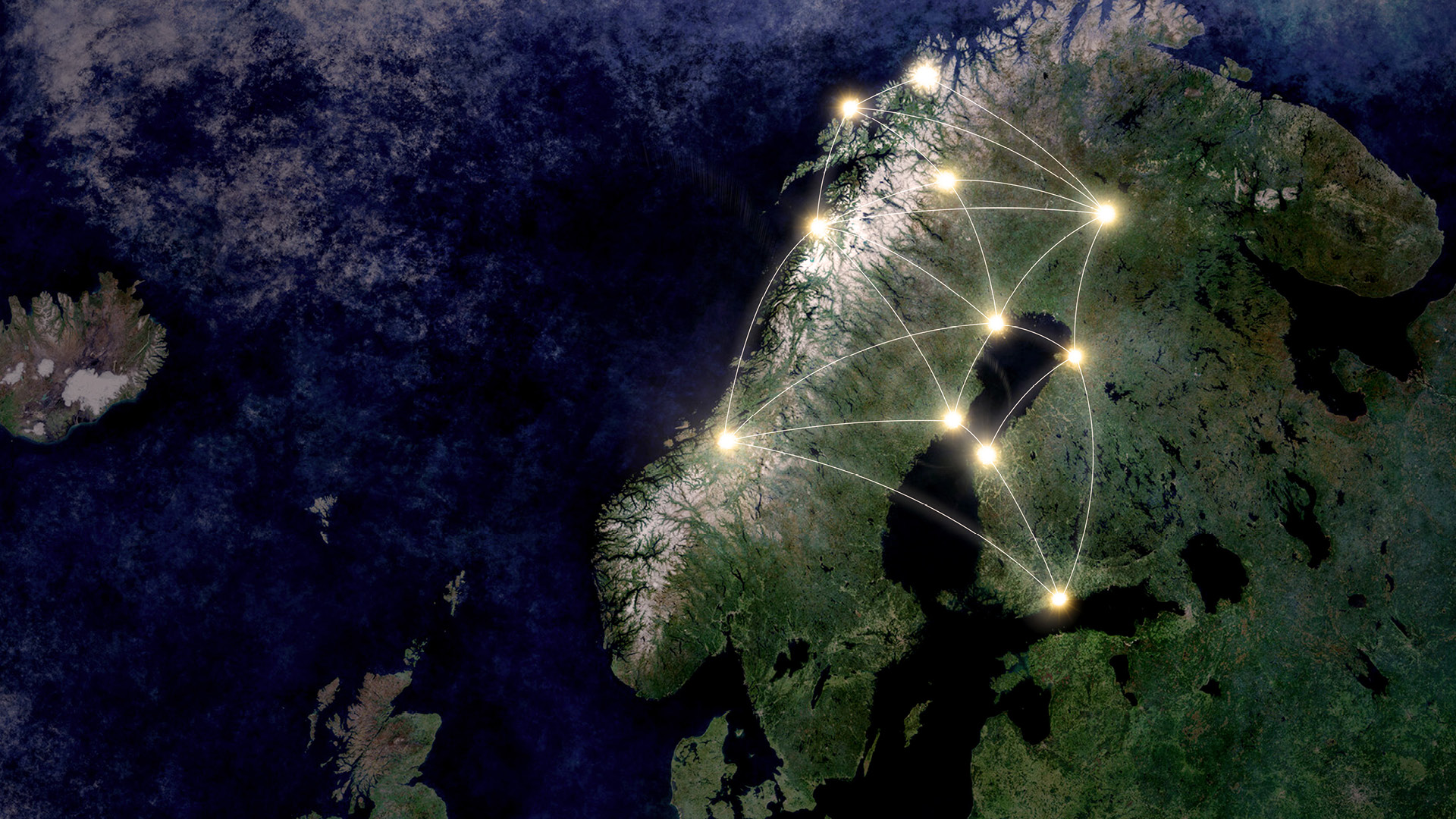
Finland, Norway and Sweden have different strengths in the space sector, but closer cooperation could create new opportunities for businesses across the Nordic Aurora region. A discussion paper prepared as part of the AuroraSpace project looks at how cross-border cooperation could be strengthened and how space governance could support the growth of the regional space industry.
Shared challenges, different strengths
The paper identifies a gap between national space strategies, which emphasise international cooperation, and practical collaboration within the Aurora region. While companies develop specialised technologies, many face challenges in finding customers, securing further funding and scaling up their operations.
At the same time, the countries have complementary capabilities. Sweden has strengths in engineering and space infrastructure, Norway in satellite operations and Arctic services, and Finland in areas such as Earth observation, satellite communications and positioning. Better connections between businesses could help combine this expertise and create new opportunities across the space value chain.
Opportunities for closer cooperation
Highlighted in the paper are several ways to strengthen collaboration, including joint public procurement, cross-border technology demonstrations, mapping companies and their capabilities, and creating more opportunities for networking and matchmaking. In the longer term, closer coordination of national policies, joint research and innovation projects, and shared infrastructure could help build a more connected regional space ecosystem.
The Aurora region also offers opportunities to develop and demonstrate solutions for shared needs, such as weather and ice monitoring, maritime safety, resilient navigation and critical infrastructure monitoring. These solutions could provide a starting point for businesses looking to expand into other markets.
Strengthening cooperation across borders could therefore benefit individual companies while helping the Nordic space sector make better use of its combined expertise.
Take a look at the paper
Prepared by Rakibul Hasan (University of Vaasa) as part of the AuroraSpace project.