
Space activities in Europe are shaped by a network of institutions, programs, and partnerships that ensure space is used responsibly, sustainably, and for the benefit of society. This page provides an overview of how space is governed in Europe through key organizations and their roles.
From pioneering space exploration to delivering satellite services that support everyday life, Europe’s space governance is built on collaboration between national agencies, international organizations, and the European Union.
ESA (European Space Agency)
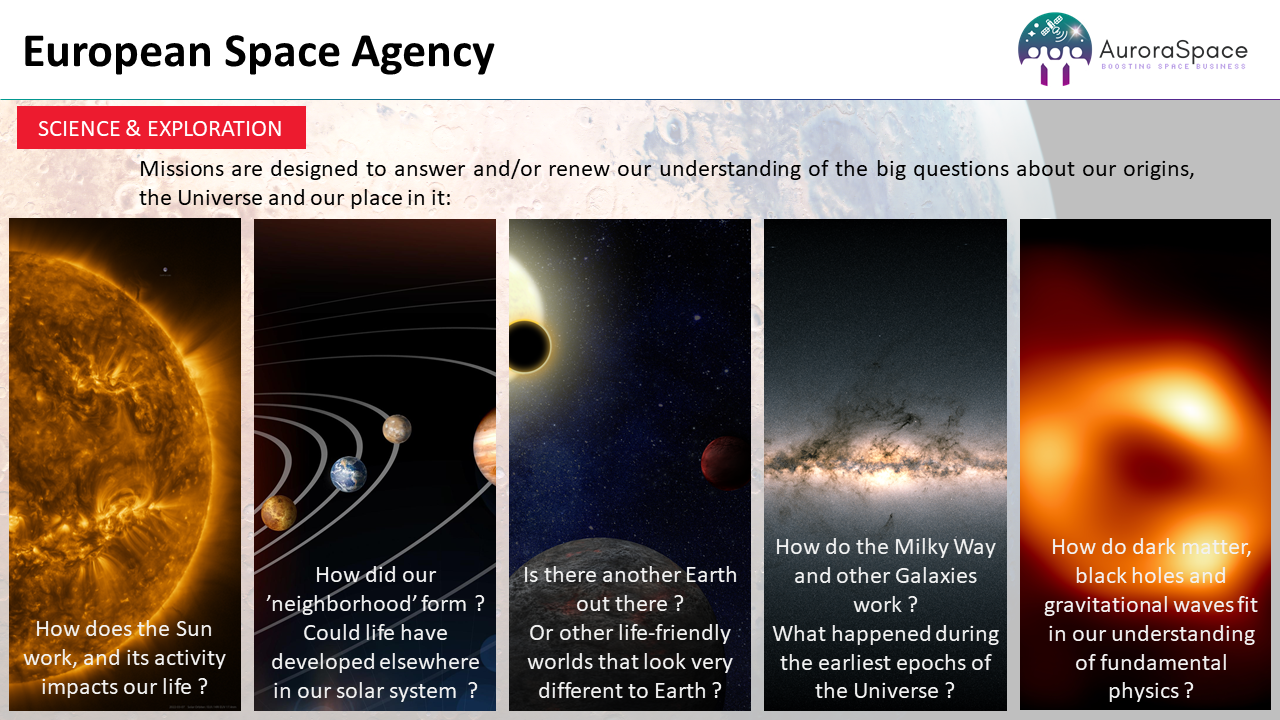
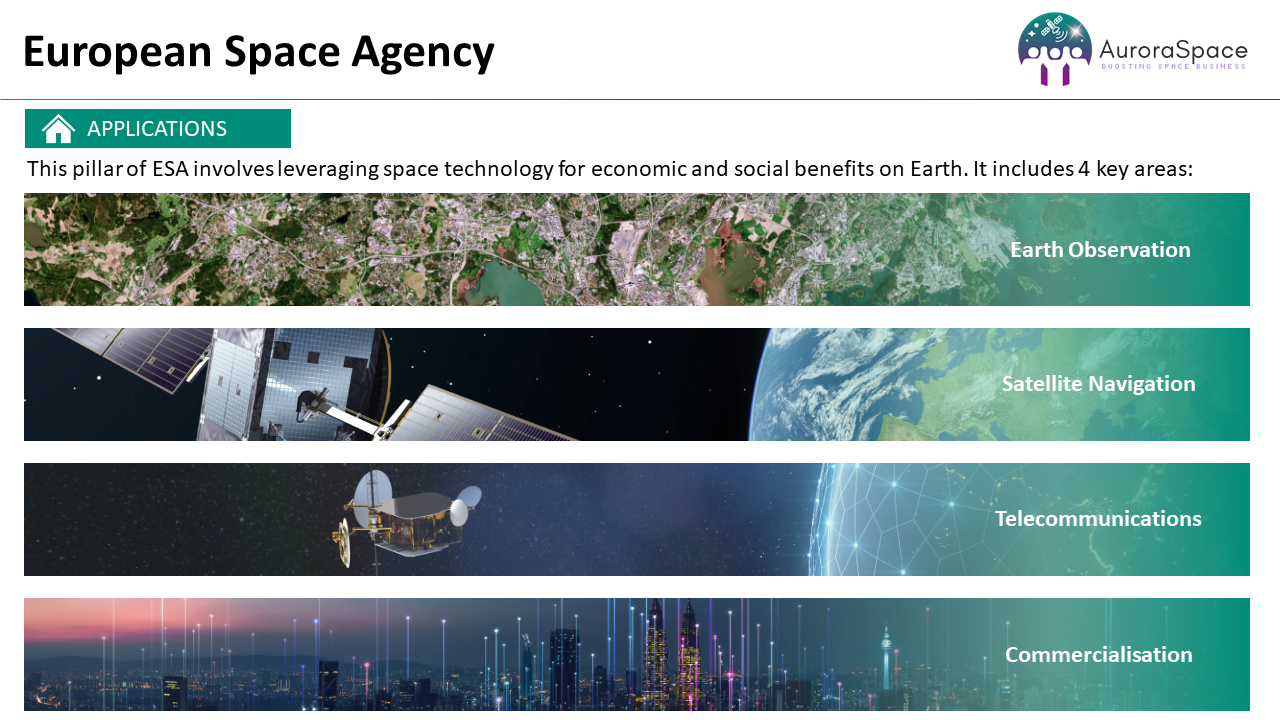
Europe’s key intergovernmental space organization, covering everything from science and exploration to applications, space safety, and support activities. ESA is an independent space agency and not under the jurisdiction of the EU.

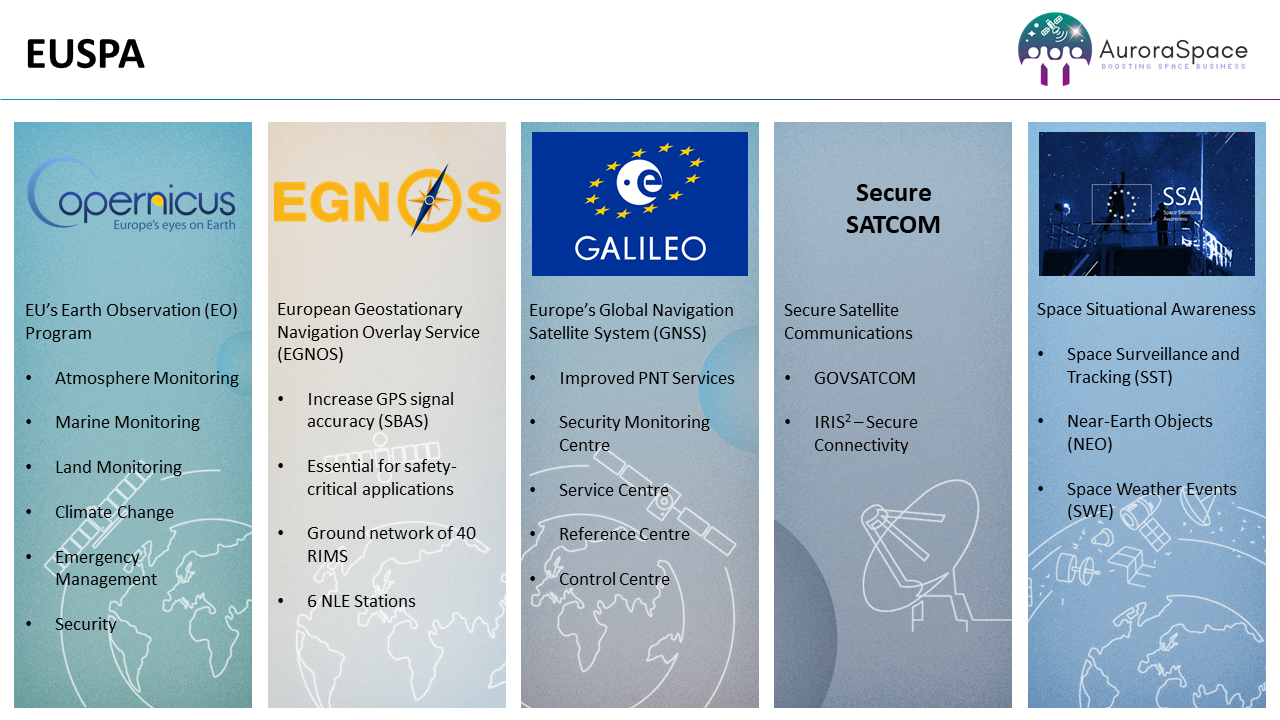
- ESA is partnered with the EU on its two flagship programs, Copernicus (part of Earth Observation) and Galileo (part of GNSS).
- Agency’s mission:
- Provide for and to promote, for exclusively peaceful purposes, cooperation among European States in space research and technology and their space applications, with a view to their being used for scientific purposes and for operational space applications systems.
- ESA handles the technical oversight (design & development) while EUSPA handles the operational elements of the EU space services.
EUSPA (European Union Agency for the Space Programme)
Focused on operational EU space services.

- Initially formed to manage the GNSS systems, EUSPA now operates Galileo, EGNOS and Copernicus services. It is also involved in secure satellite communication initiatives such as GOVSATCOM, IRIS2, as well as the Space Surveillance Tracking (SST) Front Desk.
- To develop Europe’s market for space ‘downstream sector’, EUSPA also organizes grants and calls for funding under initiatives such as Horizon Europe.
UNOOSA (United Nations Office for Outer Space Affairs)
UNOOSA takes initiatives to promote widespread and peaceful international involvement in space including UN-SPIDER – United Nations Platform for Space-based Information for Disaster Management and Emergency Response in 2006.

- The office promotes international cooperation, the implementation of space law, access to space science and technology for sustainable development, particularly for the benefit of developing countries, and supports COPUOS in developing the global governance of outer space activities.
- UNOOSA works to help all countries, especially developing countries, access and leverage the benefits of space technology.
- Helps countries understand international space law so that national space policies are in line with international frameworks.
- UNOOSA’s vision is:
- A world that fully captures the benefits of space technology, data and services.
- Where policymakers progress towards achieving the SDGs and improve the state of the world by leveraging space solutions and expertise.
- Supported by a coordinated United Nations system with an adequately resourced Office in charge of space.